Let's Connect
Stay current on the latest reports and industry insights with our Newsletter.
By entering your information you agree to receive marketing emails from the GTDC.

.
Scaling a technology business is a considerable and increasingly complex task. Despite all the available options for taking innovative new solutions to market and today’s easy access to vast audiences through the miracle of the internet, connecting value propositions with the right customers still requires significant (i.e., costly) time and resources. From building marketing, sales, business development and technical support teams to procuring facilities, equipment, prospect lists and other materials; substantial investments are needed to open and grow an IT organization.
One of the biggest hurdles technology vendors must overcome is putting those pieces in place as quickly and effectively as possible without an unlimited budget. Fortunately, the IT channel offers some very cost-effective options, including the opportunity to build a distribution strategy to alleviate many growth-related pains and minimize corporate financial risks.
Experienced technology leaders and investors understand the value that distributors bring to the table. Industry professionals appreciate the long-established logistics and financing arms of distribution as well as the wide range of services and programs these orchestrators are building to support the IT ecosystem of tomorrow. From the vendor and solution provider communities to the organizations those channel companies serve, distribution’s investments continue to empower and transform the industry.
Resource utilization is one of the most crucial factors in business success. For channel companies, that means leveraging investments and relationships to their maximum potential and getting the best possible return in the least amount of time. Distributors understand those objectives and have years of experience delivering top results for technology vendors. Many of those organizations have been helping suppliers refine and execute their channel strategies for decades, from the earliest computing devices to modern-day cloud solutions and platforms - distribution delivers more services and greater support than ever before.
One of the biggest challenges for those vendors is determining what their ecosystem should look like. What markets should they target? Which reseller/ solution provider partners could best support their offerings? What types and how many distributors do they need to achieve these objectives?
Efficiency must be a key consideration. Channel chiefs spend much of their time revisiting those questions and altering their strategies to achieve new sales and partnership targets without corresponding increases in headcount and other resources. That means making wise decisions from financial and relationship perspectives.
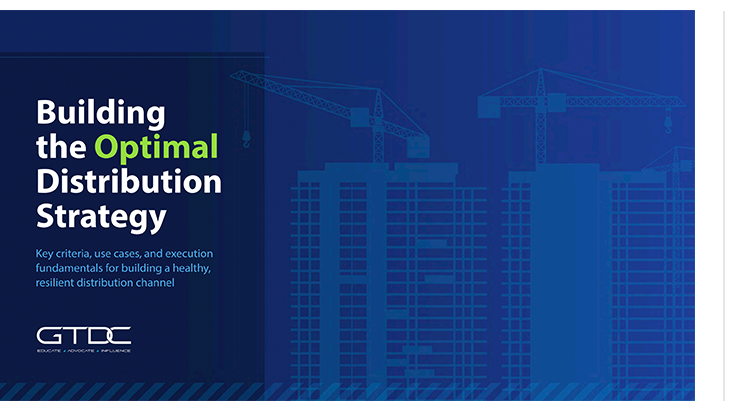
GTDC’s latest report, Building the Optimal Distribution Strategy, speaks offers practical applications and proven methodologies to help channel executives develop an executable plan. This valuable whitepaper illustrates best practices for aligning coverage with goals and finding the right mix of distributors to achieve the organization’s key objectives.
More is not always better. Finding and securing strong relationships with the “best fit” distribution partners allows channel executives to better leverage their limited resources. Optimizing these alliances is especially critical for emerging vendors that need to scale operations quickly and efficiently to boost cash flow and fuel further expansion.
The new GTDC report highlights best practices to expedite and improve that process, including:
1. Prioritize strategic alignment - Distribution partners should fully support the vendor’s overall goals by offering programs, market coverage, partnerships and other factors deemed critical to their success.
2. Avoid overpopulation - Excess capacity creates internal competition, compresses margins and reduces vendor profitability. Rationalizing the channel ecosystem allows executives to strengthen the organization’s financial health and investment capabilities.
3. Create strategic partnerships - Modern IT distribution involves much more than logistics—these orchestrators provide technical enablement, market development, financing and digital transformation support. Successful channel vendors collaborate closely with their distributor partners and build teams that support their combined mission.
4. Explore digital platforms/ marketplaces - Whether leveraging digital platforms of current distributors which can reduce risk and improve onboarding efficiencies, or pursuing new alliances, these tools allow channel executives to quickly broaden their market coverage and capabilities.
5. Tailor strategies by company needs and market maturity - There is no one-size-fits-all approach to distribution optimization. Each alliance should match channel partner capabilities and market reach with company offerings, varying tactics by region, specialization and potential M&A situations (eliminating overlap after acquisitions).
Those are just a few of the many factors that channel chiefs need to consider when developing their distribution strategies. Download a free copy of the report for more insights on this critical topic.
Selecting which distribution partners will be the best fit is a critical part of building a channel strategy, but without an effective initial engagement, these relationships may never develop to their full potential. Onboarding is where vendors build their blueprint for success.
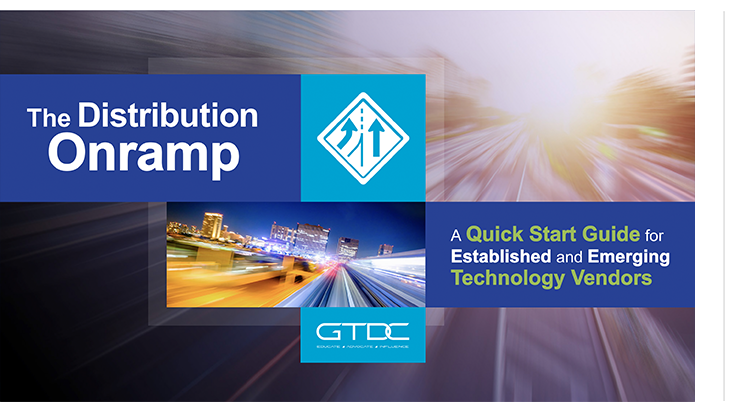
Earlier this year, the GTDC research team explored the best practices of that process with vendor and distribution thought leaders and documented their invaluable insight and other key findings in a new report. The Distribution Onramp: A Quick Start Guide for Established and Emerging Technology Vendor was designed to help suppliers looking to initiate, develop, and strengthen these most valued IT channel alliances. Considerations before commencing this process include:
• Evaluate market coverage to identify gaps and opportunities for expansion.
• Prepare offerings: optimize products and services for channel partners/ distribution.
• Align sales and technical competencies to ensure the respective teams can collaborate and help manage lead generation, pipelines and partner support.
• Establish clear rules of engagement to avoid misunderstandings and partner conflicts.
• Ensure offerings are “channel-ready” to speed adoption and ensure greater sales success through distribution.
• Invest in marketing resources and programs to promote your offerings effectively to channel partners.
• Provide technical resources to train and support distributor teams and integration projects.
• Set clearly defined goals to establish relationship metrics and track future progress.
• Fully commit to prospective distribution partners and provide needed/valued resources.
In addition to those tips to ensure onboarding success, the document highlights some of the more common vendor missteps with this process, including a lack of preparation, insufficient investments, failure to follow through with commitments and ignoring the needs of partners and target markets. Immediate disengagement (extricating team members from the relationship after onboarding) is another all-too-frequent issue that will disrupt if not sever these valued alliances. For more details, tips and best practices, download a free copy of The Distribution Onramp.
These are just two of the most recent additions to the GTDC roadmap to channel success. Check out the council’s Knowledge Hub for more insightful industry resources, including additional research, on-demand webinars, podcasts and other useful tools.
Stay current on the latest reports and industry insights with our Newsletter.
By entering your information you agree to receive marketing emails from the GTDC.